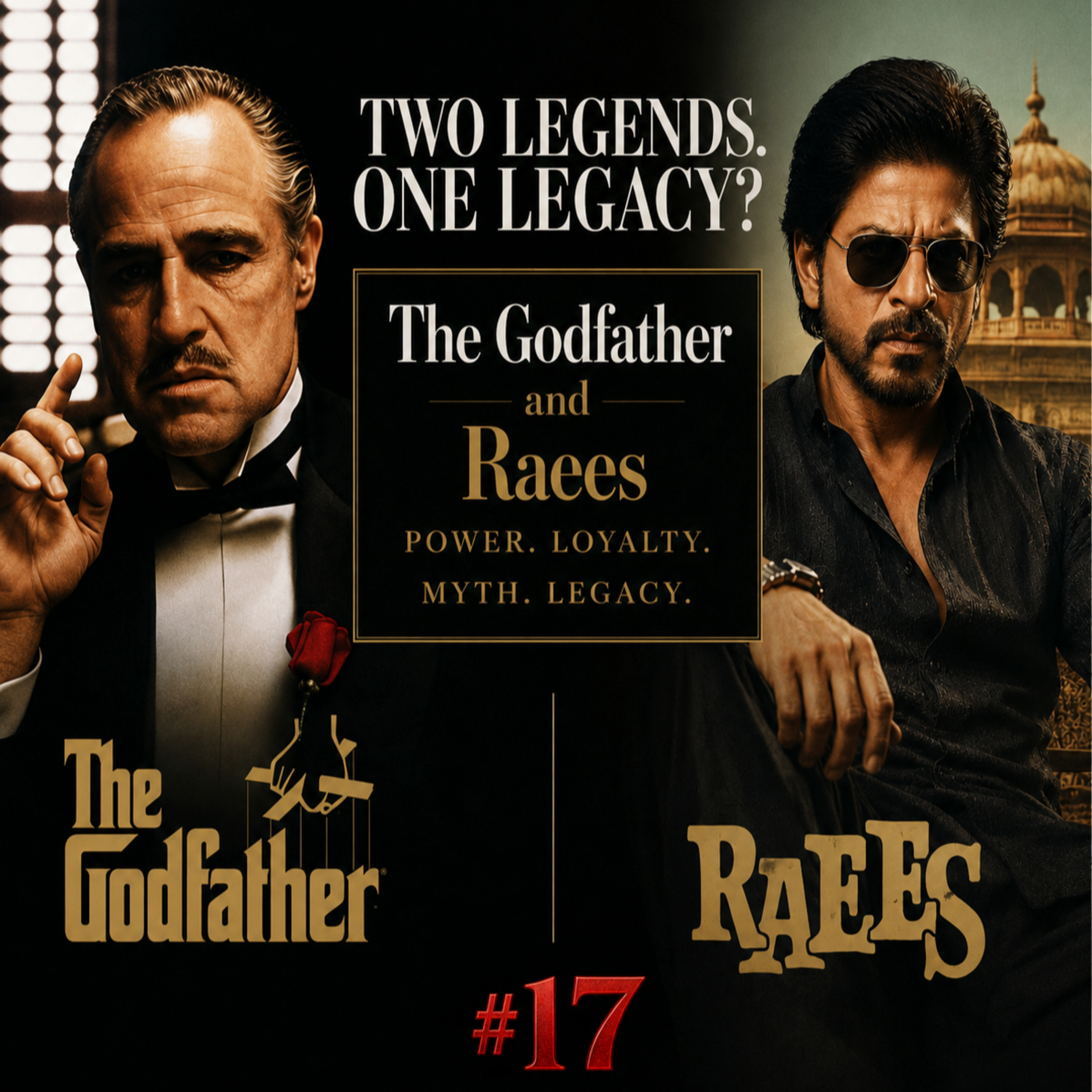
#17- Raees: Bollywood's Answer to The Godfather
About this episode
Shah Rukh Khan's Raees is Bollywood's answer to The Godfather... but does it hold up?
I dive into crime drama storytelling, comparing how Indian cinema tackles anti-heroes, moral ambiguity, and corruption differently than Hollywood classics.
Get ready for heated takes on character development, cinematography, and whether SRK's underworld king matches Vito Corleone's legacy.
bollywood reactions shah rukh khan films indian cinema analysis classic bollywood movies hindi cinema storytelling
The mob, Hollywood, the Rat Pack, Frank Sinatra, Abdul Latif, the Godfather, Rais. We're here. Welcome back, y'all. Let's go. You know, I'm Amy. You know what we are here about to do. Now let's get into it. Where we last left off. We were talking Abdul Latif and how his family felt about the film race and what they chose to do about this. And what does that have to do with Hollywood favorite classic smooth Frank Sinatra and another film, another notorious gangster we love in The Godfather. Wow. Abdul Latif and Frank Sinatra occupy opposite ends of legality and genre, but both are widely seen as real life inspirations for fictional characters in Rais and The Godfather respectively.
OK, so we already talked about how Abdul Latif's family felt about this as well. We all know he was no longer with us when Rais all came about. And how did Frank Sinatra feel about his inspiration for a character in the infamous Godfather film? Oh boy. The thing is, we all figure, and we are probably all correct, that certain types of people do not play when it comes to respect on their name. And probably we also all know somehow, Don't ask me how, do not react super passively when it comes to disrespect or what matters to them, you know?
Yeah. Oh, I love this stuff. And so in my excitement to share with you, I, of course, am getting ahead of myself here. All right, All right. So Frank Sinatra or the Rat Pack of Hollywood. It was never in the Godfather film, but he is closely associated with it because many people believe the character Johnny Montane was modelled after him. Remember him Johnny Fontaine and the Godfather and the character is a a popular Italian American singer and actor with a faltering career rescued by his powerful mafia godfather, which, if you may have noticed can resemble here now public stories about Sinatra's actual career struggles and alleged mob connections.
The character Johnny Fontaine as Don Don Vito Corleone to help him get a crucial movie role, echoing rumors that mob influence helps Sinatra secure his Oscar winning part as Maggio.
Shots fired. Oh wow, Yikes. So I guess you can imagine Sinatra was reportedly furious about the perceived portrayal like him and confronted the author Mario Puzo in public, telling him, calling him a, saying he would and telling him to. And then which caused A followed by, yeah, I mean, I'm not going to spell out what happened and was said right here and now, but I'm sure you can imagine what a went down. And that is just what was seen and heard publicly. So, yeah. His lawyers sent letters demanding to see the manuscripts of the Godfather novel and pushing for change as an early attempt to control or derail the portrayal before it became a film.
Sound familiar to another person and another film? He's reported to have use threats and pressure in show business circles, including a warning relayed to actor Owl Martin Martino that Sinatra would bar him from Las Vegas. You heard me right, all of Las Vegas. Can you do that? If he took the Johnny Fontaine role, an effort to scare people away from even participating, accounts and later retelling suggest he learned the role. And then he leaned on mob linked allies and Italian American groups that were already fighting the movie, hoping industry and underworld influence could help Black or reshape the project.
Puzo publicly denied that Fontaine was literally Sinatra, calling him a composite of several Italian American singers rather than a 1 to 1 portrait of Sinatra, in part to blunt legal or personal blowback. But director Francis Ford Coppola later acknowledged that Johnny Fontaine was clearly Frank Sinatra like reinforcing long standing association, effectively confirming that audiences were meant to recognize the resemblance without the film naming Sinatra directly. Wow, no plot twist there. Not for us here anyway, right?
I mean, come on. So it turns out long standing gossip does say that mob associates pressured Columbia pitchers to cast Sinatra in the film From Here to Eternity after he'd initially been rejected, which some writers connect to the horse head offer He can't refuse. Storyline and The Godfather FBI files, testimony and biographies document Sinatra socializing with figures like Willie Morati, Sam Giacana and other mobsters, feeling the belief that the film was riffing on real underworld Hollywood intersections rather than pure fiction.
To Sinatra, Fontaine was insulting because the character is needy, shallow and dependent on the mob, implying Sinatra's success came less from talent and more from criminal patrons, precisely the narrative he spent decades trying to knock down. To gossip columnist, columnist, and many fan like us, a film, the Fontaine Sinatra link became a Safeway to talk about mob rumors in public. Everyone could get the reference, you know, while the names were changed just enough to keep it in the realm of deniable fiction.
What do you think? Do you think it's possible? I don't know about you, but I am, Well, big surprise. Curious, should we dig deeper just for a moment? It's a quick, you know, pit stop on this ride we are currently on but want to play Detectives peek into this story for a second to see what we think is the truth with this small detail. How did Frank Sinatra get that wrong? We would never really know. It's too late to go back in time and try to hide behind a plants or something. But a closer look never hurt anybody, right?
You want to come with? Come on, I swear it'll only take a minute.
 Apple Podcasts
 Castbox
 Castro
 Goodpods
 Moon FM
 Overcast
 Pocket Casts
 Podbean
 Podcast Addict
 Podcast Republic
 Spotify
 YouTube