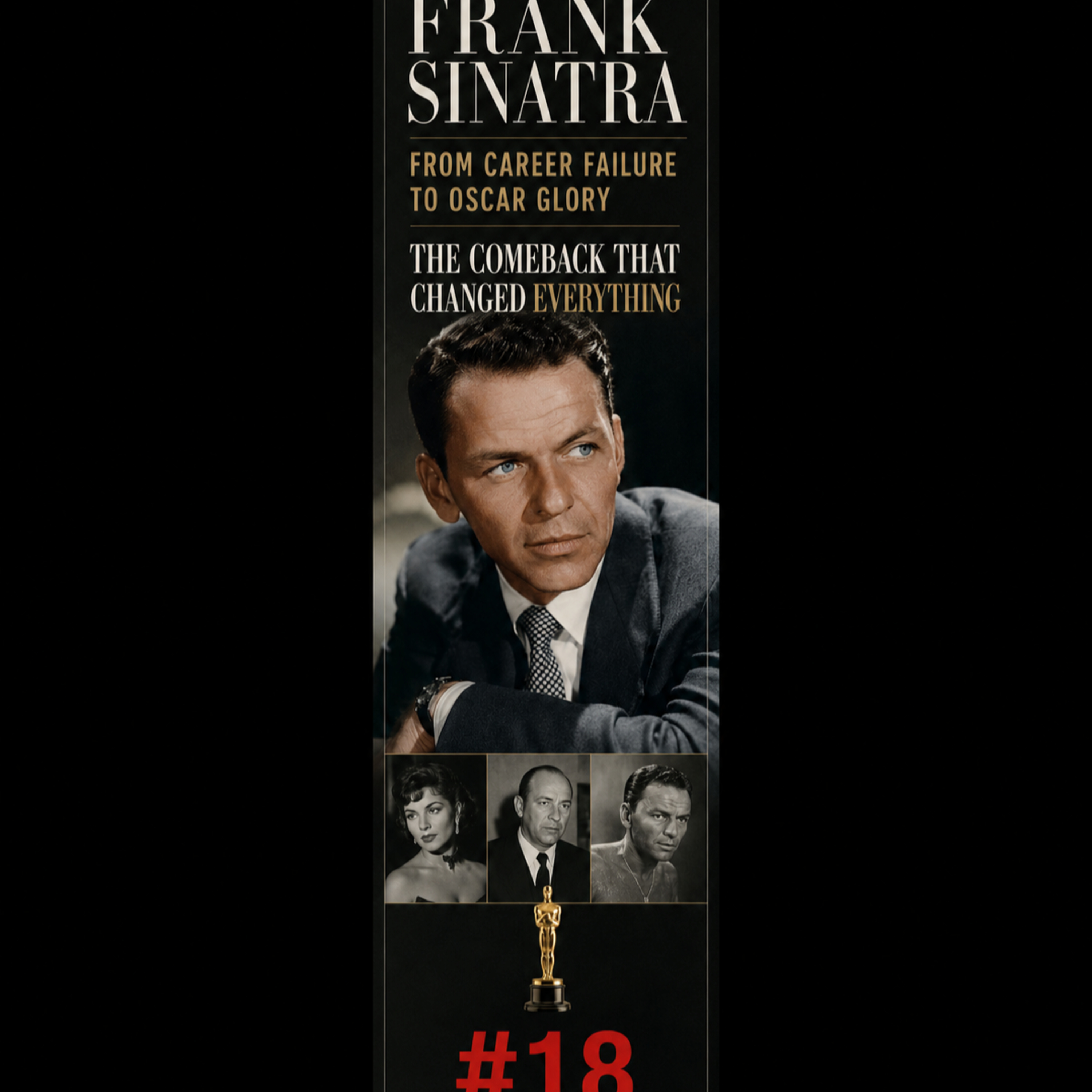
#18- Being Frank About Frank | Hindi Cinema Analysis
About this episode
In this episode, I explore one of the most fascinating comeback stories in Hollywood history: how Frank Sinatra went from being a fading star in the early 1950s to winning an Oscar and completely reinventing his career.By the time *From Here to Eternity* entered production, Sinatra's music career had stalled, his record sales were falling, and many people in the industry believed his best days were behind him. Yet he became determined to land the role of Angelo Maggio, a part that would ultimately change everything.I take a closer look at the real story behind Sinatra's pursuit of the role, including the influence of Ava Gardner, the involvement of Columbia studio chief Harry Cohn, and the surprising stroke of luck that helped Sinatra secure the part when another actor stepped away.I also examine the long-running rumor that Sinatra used mafia connections to get the role... a story later immortalized through Johnny Fontaine in *The Godfather*. Was there any truth to it, or was it simply one of Hollywood's most enduring myths?Most importantly, I explore how Sinatra transformed his personal struggles into a powerful performance, won the Academy Award for Best Supporting Actor, and launched one of the most remarkable second acts in entertainment history.**Chapters:**00:00 Introduction00:18 Frank Sinatra's Career Crisis00:29 Chasing the Role of Angelo Maggio00:56 Why Harry Cohn Took a Chance01:14 The Fight to Get Cast01:43 The Lucky Break That Changed Everything01:58 Sinatra Finally Lands the Role02:14 The Mafia Rumor Begins02:52 Separating Myth from Reality03:34 Bringing Real-Life Struggles to the Screen04:15 The Oscar That Changed Everything05:02 How Eli Wallach Altered Sinatra's Fate05:24 The Decision That Made History05:45 Sinatra's Remarkable Comeback06:00 Final Thoughts
veer-zaara shah rukh khan films yash chopra films hindi cinema storytelling bollywood romance
I love a comeback, don't you? Hey, it's Amy. You love a comeback, right? I got nothing but admiration for pure, unaltered, great call, undefeated spirit, a go getter who keeps going, never gives up. By the early 1950s, Sinatra's records were not selling and he had been dropped by Columbia Records. So he aggressively pursued Maggio as a potential comeback role, even saying he would do it for almost nothing. Contemporary accounts and later biographies say his then wife, Ava Gardner, used her influence with Columbia chief Harry Com, often via Cohen's wife, to push Sinatra's name.
Cohen eventually agreed, partly because Sinatra's stock at that point, as he said, was so low the studios could hire him cheaply. Sinatra had to submit to a humbling screen test, possibly beneath him, maybe insulting in a way, and embarrassing. We love humble King who has internal worth and drive and can do what needs to be done no matter what. Did he finally then get the bar after all that? We know how this can be, how it can work The biz. Nah, he certainly did not. He was only confirmed after another actor, often identified as Eli Wallach, dropped out, leaving the roll open again.
Hmm, well, that's interesting, isn't it? Interesting indeed. Drop down. As we discussed earlier, a famous rumor claims Sinatra got the roll thanks to mafia pressure on Columbia Pictures, and this story helped inspire the Johnny Fontaine subplot in The Godfather that we talked about. Cast and crew, including director Fred Zetterman, later discussed the mob pressure tale as pure invention, describing it as poetic license on Mario Puzo's part rather than what actually happened. Hmm. OK. Apparently, when the deal finally closed in early 1953, Sinatra was paid a mere fraction of his 1940s musical star fees, underlining how much you need in the job.
And wait for it, wait for it. That comeback, I just, I just gotta have. Well, the Maggio role tapped into Sinatra's real life sense of frustration and defeat, which Costars later said fed directly into the performance's intensity and bitterness. And his Oscar win for Best Supporting Actor turned the gamble into a complete career reset, leading to a surge in serious film roles and a new recording contract that kicked off his celebrated mid 1950s comeback. And there it is.
It's a spot. I mean, the best grips are off in real life history. So what do you think, huh?
I know you also did not miss a tiny little piece of the puzzle and the saga and tiny little tidbit AD towel. Wow, I was unsatisfied making for a little more there on that and so it seems or is noted reported that when I look into it, of course I had to that the actor Eli Wallach at one point attached to Maggio, their original we noticed together had dropped out a key part in the comeback. No Hmm, did so to honor a Broadway commitment. Quite a lucky break for Sinatra, wouldn't you say? As we know as it then finally opened the door for Sinatra finally then to step in to the life changing role in huge and intentional, strategic needed and quite effortful come back.
Well this is a clear non mob explanation consistent with normal casting turnover, assuming it is true, with no influential outside forces of course to make it true at the time or later. What do you think?
 Apple Podcasts
 Castbox
 Castro
 Goodpods
 Moon FM
 Overcast
 Pocket Casts
 Podbean
 Podcast Addict
 Podcast Republic
 Spotify
 YouTube